
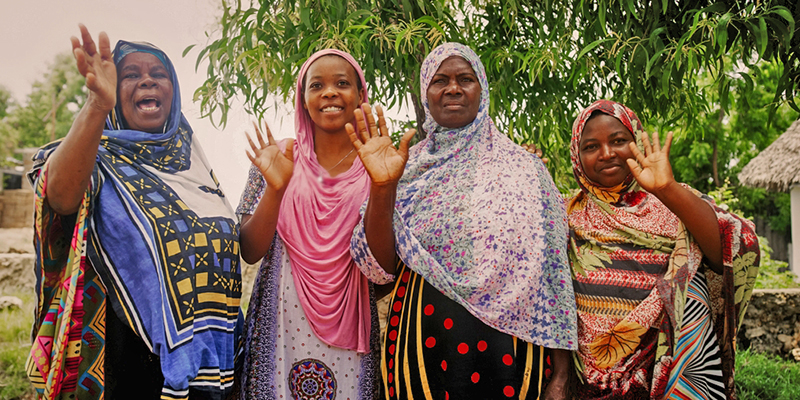
Primary School Deworming in Kenya

Hundreds of millions of children worldwide are infected with parasitic worms. These worms are detrimental to children's health, their cognitive development, their education and their futures. Chronic illness caused by worm infections reduces literacy and adult productivity. 

Free deworming treatment substantially improved student attendance and health. The program also had significant "spillover" effects, improving health outcomes and attendance among students in neighboring primary schools. 

Including the spillover benefits of treatment, the cost of keeping a child in school one additional day is only US$0.02, which makes deworming considerably less expensive than any alternative method of increasing primary school participation.

Given the great success of this project, IPA is now working to Scale Up school-based deworming in partnership with Deworm the World.

Show Project Evaluation Details
Hide Project Evaluation Details

<--break->

Policy Issue

Intestinal helminths—including hookworm, roundworm, schistosomiasis and whipworm—infect more than one in four people worldwide and are particularly prevalent among school-aged children in developing countries. These intestinal worms are believed to have a negative impact on education, hindering child development as well as school attendance and reducing income later in life. These effects are especially pronounced in Africa, where nearly half of the total disease burden is due to infectious and parasitic diseases, including helminth infections. Existing randomized studies have focused primarily on the effects that these diseases have on cognitive performance, whereas outcomes of more direct interest to economists and policymakers—school attendance and enrollment, test scores, and ultimately, labor market outcomes—have yet to be thoroughly investigated.

Context of the Evaluation

Busia district is a poor and densely-settled farming region in western Kenya adjacent to Lake Victoria. Budalangi and Funyula divisions have some of the country’s highest helminth infection rates, in part due to the area’s proximity to Lake Victoria—schistosomiasis is easily contracted through contact with the contaminated lake water. Soil-transmitted helminths (STH), on the other hand, are transmitted through contact with or ingestion of fecal matter. This can occur, for example, if children do not have access to a latrine and instead defecate in the fields near their home or school, where they also play. One quarter of Kenyan student absenteeism is attributed to abdominal pains which likely due to intestinal helminth infections. In addition, older children may miss school to take care of siblings who are sick with helminth infections.

Details of the Intervention

This study evaluated the Primary School Deworming Project (PSDP), which was carried out by International Child Support in cooperation with the Busia District Ministry of Health. The program randomly divided 75 schools into three equal groups which were phased into treatment over three years.

Within each group, a baseline parasitological survey was administered to a random sample of pupils. Schools with worm prevalence over 50% were mass treated with deworming drugs every six months. Girls of reproductive age (thirteen and older) were not supposed to be treated due to concerns about the possibility of birth defects. Nonetheless, 19% of girls thirteen and older also received medical treatment, partly due to confusion about pupil age, and partly because several Kenyan public health nurses administered drugs to some older girls, judging the benefits to outweigh the risks. In addition to medicine, treatment schools received regular public health lectures, wall charts on worm prevention, and training for one designated teacher. The lectures and teacher training provided information on worm prevention behaviors—including washing hands before meals, wearing shoes and not swimming in the lake.

Results and Policy Lessons:

Impact on Infection Intensity: Deworming reduced serious worm infections by half amongst children in the treatment groups. Pupils that received treatment reported being sick significantly less often, had lower rates of severe anemia, and showed substantial height gains, averaging 0.5 centimeters.

Impact on School Attendance: Deworming increased school participation by at least 7 percentage points, which equates to a one-quarter reduction in school absenteeism. When younger children were dewormed, they attended school 15 more days per year, while older children attended approximately 10 more school days per year. The larger impact of treatment in lower grades may partially result from higher rates of infection among younger pupils.

Treatment Spillover: The entire community and those living up to 6 kilometers away from treatment schools benefited from “spillovers” of the deworming treatment. Spillover effects occur because medical treatment reduces the transmission of infections to other community members. Reductions in infection in non-treated children resulted in an additional 3 to 4 days of schooling per year. Although data was not collected on adults, it is also likely that older community members were able to work more days as a result of spillover effects.

No improvements in test scores were found as a result of the deworming. Additionally, evidence suggests that health education had a minimal impact on behavior, so that to the extent that the program improved health, it almost certainly did so through the effect of the medicines rather than through health education. Including the spillover benefits of treatment, the cost per additional year of school participation is US$3.27, considerably less than the cost of many alternative methods of increasing primary school participation.


Smoothing the Cost of Education: Primary School Saving in Uganda

Policy Issue:

The importance of education is a common refrain in the international development discourse and has inspired campaigns such as the second Millennium Development Goal: to achieve universal primary education.   Decreasing primary school dropout rates is one strategy that has been employed to improve education systems. Children drop out for a number of reasons, but financial concerns are often a determining factor.  Even when governments finance a significant part of primary education, providing teachers, curriculum and buildings, there are still many costs associated with attending school.  Providing scholastic materials such uniforms, pens, pencils and exercise books may pose a significant challenge for poor families.  Furthermore, these families may lack access to formal savings services, which may enable them to set aside money for education and keep it secure.  This evaluation assesses the impact of a school-based savings program that aims both to encourage savings for school expenses and to promote financial education.

Context of the Evaluation:

Uganda’s primary school enrolment rates have increased spectacularly as a result of its policy of Universal Primary Education, which has eliminated most, though not all costs of attending school.  Enrolment has gone from 3.1 million children in 1996 to more than 8.29 million in 2009.  Retaining pupils, however, seems to be a more trying concern, though 94% of Ugandan children enroll in primary school, as few as 32% complete the final class P7[1]. While the government covers costs of teachers and schools, more than 40% of Ugandans find additional school expenses, like uniforms and supplies, unaffordable.

Show Project Evaluation Details
Hide Project Evaluation Details
Description of the Intervention:

IPA has partnered with the Private Education Development Network (PEDN) and FINCA, Uganda to implement a savings program in Ugandan government primary schools.  The goals of the “Super Savers Program” are to 1: enable pupils and their families to save money for education 2: incentivize and financially enable pupils to remain in school and 3: engender a culture of savings amongst participating pupils.

During the 2009 scholastic year, IPA, PEDN and FINCA piloted the program in eight government primary schools.  The positive response to the pilot motivated researchers to scale the program and conduct a randomize evaluation of its impact. 

At the end of 2009, the baseline data was collected in 136 schools in Jinja, Iganga, Mayuge and Luuka Districts after which schools were randomly assigned to a treatment or comparison group. There were 39 schools in each of the two treatment groups and 58 schools in the comparison group.  Throughout the 2010 and 2011 scholastic years (February to November), the program was implemented in the treatment schools. 

On a weekly basis a Super Savers Program Officer visited each school to assist teachers and pupils with the savings exercise.  Pupils’ savings were kept at the school in a safety lock box.  At the end of each term, the Super Savers Team and partner organization FINCA, Uganda collected the savings from schools and deposited the money into each school’s bank account. The Super Savers Team also conducted a parent sensitization program for the treatment schools, in which meetings were held at each school to present, discuss and teach parents about the program.

At the beginning of each of the year’s three school terms, FINCA and the Super Savers team returned to all schools to distribute savings to individual pupils. In the first treatment group, pupils received their savings in cash and were able to determine how they would like to spend or save the funds.  In the second treatment group, pupils received their savings in the form a voucher, or coupon for the exact amount a child had saved.  The voucher had to be used to make some educationally related purchase, such as school lunch, exam fees, a uniform, sanitary supplies for girls or to continue saving.  On the day of the savings payout, the Super Savers Team organized a small fair at each school to enable pupils to make these purchases in both cash and voucher treatment groups.

Comparing outcomes within these two treatment groups, in relation to the comparison group, will help to determine if the intervention is effective in reducing drop-out rates and increasing savings levels, scholastic payments and other education outcomes.

The Super Savers Team is now preparing for the 2012 scholastic year, which will be used to determine the sustainability of the program and schools’ abilities to implement on their own, with little support from the team.  This will be used to determine the program’s ability to be scaled and its long-term potential.

Results and Policy Lessons:

Results forthcoming.


[1] According to administrative data: http://www.unicef.org/infobycountry/uganda_statistics.html#77

Dean Karlan, Leigh Linden

The Illusion of Sustainability: Comparing Free Provision of Deworming Drugs and Other "Sustainable" Approaches in Kenya

Policy Issue: 

Intestinal helminths—including hookworm, roundworm, schistosomiasis and whipworm— infect more than one in four people worldwide and are particularly prevalent among school-aged children in developing countries. Worms are believed to have a negative impact on child development, and can contribute to lower educational attainment and income later in life. Intestinal worms can be effectively treated with low-cost drugs, but treatment must be continued indefinitely to prevent re-infection. Finding sustainable approaches to providing deworming drugs is a pressing research question, as most deworming interventions are currently financed by external institutions. Practices such as health education or cost-sharing may be able to increase program sustainability, but there is little systematic evidence on this matter.

Show Project Evaluation Details
Hide Project Evaluation Details

Context of the Evaluation: 

Busia district is a poor and densely-settled farming region in western Kenya adjacent to Lake Victoria. Budalangi and Funyula divisions have some of the country’s highest helminth infection rates; upwards of 90% among children aged 6-18. This is in part due to the area’s proximity to Lake Victoria—schistosomiasis is easily contracted through contact with the infected lake water. Other types of helminths can be transmitted through contact with or ingestion of fecal matter. This can occur, for example, if children do not have access to a latrine and instead defecate in the fields near their home or school, areas where they also play.

The prevention and treatment of infectious diseases such as worms is a priority for health officials, and more efficient and sustainable programs could enable the delivery of health care to a larger number of people. Advocates of improving sustainability concentrate on health education, community mobilization and cost-recovery from program beneficiaries to complement the more standard practice of subsidizing health products.

Details of the Intervention: 

This study evaluated the Primary School Deworming Project (PSDP), which was carried out by NGO International Child Support in 75 schools, randomly divided into three groups (1, 2, and 3) and phased into treatment over three years. In each group, a baseline survey was administered to a sample of pupils and all schools with helminth prevalence over 50% were treated with albendazole biannually, while schools with schistosomiasis prevalence over 30% were treated with praziquantel annually.

Cost-Sharing: In 2001, 25 of the 50 Group 1 and Group 2 schools were randomly selected to pay user fees for deworming treatment. Two thirds of the schools participating in cost-sharing received albendazole at a cost of US$0.40 per family, and one third received both albendazole and praziquantel (depending on the local prevalence of schistosomiasis) at a cost of US$1.30 per family. The fee was set on a per-family basis. This introduced within-school variation in the per-child cost of deworming, since households have different numbers of children.

Health Education: In addition to medicine, all treatment schools received regular public health lectures, wall charts on worm prevention and training for two teachers from each school. The lectures and teacher training provided information on worm prevention behaviors—including washing hands before meals, wearing shoes and not swimming in the lake.

Verbal Commitments: A verbal commitment "mobilization" intervention asked people to verbally commit in advance to adopt the deworming drugs.

A questionnaire was conducted in 2001 to test whether households with more “social links” to schools which received early treatment would be more likely to take deworming drugs. Respondents were asked about the friends and relatives they speak with most frequently about child health issues, and the degree of “linkage” to treatment schools was established on this basis.

Results and Policy Lessons: 

Cost-Sharing Intervention:The introduction of a small fee for deworming drugs led to an 80% reduction in treatment rates, consistent with the hypothesis that people have low private valuation for deworming. Take-up dropped sharply when going from a zero price to a positive price, but was not sensitive to the exact price level, suggesting that it may be counter-productive to charge small positive prices for the treatment of infectious diseases.

Health Education & Verbal Commitment Impact:An intensive school health education intervention had no impact on worm prevention behaviors. Child health is likely to be worsened to the extent that funds are diverted from medical treatment into health education in this setting. Asking people in advance whether they planned to take deworming drugs also had no impact on adoption.

Social Learning:Individuals in treatment schools who had more extensive social networks, and therefore presumably had more information about deworming drugs, were significantly less likely to consent to take the drugs. For each additional social link to a family that had already received treatment, a family’s child is 3.1 percentage points less likely to take the drugs, and  these individuals were also more likely to believe the drugs are “not effective.” Negative social effects on take up are especially large for families with more knowledge about deworming, which may be due to overly optimistic prior beliefs about the net private benefits of the drug. A significant portion of deworming benefits flow to others in the local community through positive externalities. The reductions in serious worm infections for untreated students were 70-80% as large as those for treated students, thus while the overall program impact is large, the private benefits of treatment appear only moderate.

Overall, findings suggest that socially desirable health technologies with low private benefits may not spread on their own, due to low private estimations of the benefits which are reinforced through social networks.

Balwadi deworming in India

Policy Issue: 

Nearly 40% of children in Africa and Asia suffer from iron deficiency anemia (IDA), which can result in weakness, stunted physical growth, and a compromised immune system. Intestinal helminths (worms) cause chronic intestinal blood loss which contributes to iron deficiency anemia. Worms are prevalent among children in developing countries and are believed to have a negative impact on education, impacting child cognitive and physical development as well as school attendance. Estimates suggest that the impact of iron deficiency anemia—through both physical and cognitive channels—could be as large as 4% of GDP on average in less developed countries, yet there is little rigorous work by economists on the effects of anemia on economic development.

Show Project Evaluation Details
Hide Project Evaluation Details

Context of the Evaluation: 

Like other developing nations in the region, iron deficiency anemia and Vitamin A deficiency affect many of India’s children. Over 69% of preschool aged children in urban Delhi are anemic and 30% suffer from intestinal worms, contributing to the high prevalence of malnutrition. In 2005, 46% of children were found to be underweight, and 38% were found to have stunted growth. Children in this study typically came from families of poor migrant laborers, and have a particularly high risk of anemia and other nutritional deficiencies.

Details of the Intervention: 

This study evaluated the impact of NGO Pratham’s preschool nutrition and health project in the slums of Delhi, India. The program delivered a package consisting of iron and Vitamin A supplementation and deworming drugs to 2-6 year old children through an existing preschool network.

Two hundred preschools with a total of 2,392 children were randomly divided into three treatment groups, which were gradually phased into the program over two years. The deworming drugs were taken at “health camps” held at the preschool approximately every three months. Preschool teachers in treatment schools were instructed to administer daily iron doses for thirty school days following each health camp. Children in both treatment and comparison groups were also administered Vitamin A supplements, which in addition to other health benefits, promotes the absorption of iron.

Results and Policy Lessons: 

Child Weight Gain: Large gains in child weight—roughly 0.5 kg on average—were found in the treatment schools relative to comparison schools over the two-year study period. No gains in average child height were found, but this pattern makes sense from a clinical standpoint: iron supplementation is thought to reduce acute malnutrition in the short-run by improving the absorption of micronutrients and increasing appetite, but improvements in chronic malnutrition are not expected over short periods.

Impact on School Attendance: Average preschool participation rates increased sharply by 5.8 percentage points among treated children, reducing preschool absenteeism by roughly one fifth.

Given the low cost of the intervention (averaging approximately US$1.70 per additional year of schooling induced for one child), these results suggest that the package of iron, Vitamin A and deworming drugs is a highly cost-effective means of improving child school participation and health in a poor urban setting where anemia and worm infections are widespread.

Edward Miguel
Syndicate content
Empowered by:
Copyright © 2011 Innovations for Poverty Action. All rights reserved.