


Human Capital, Financial Capital and the Economic Empowerment of Female Adolescents in Tanzania and Uganda

Policy Issue: 

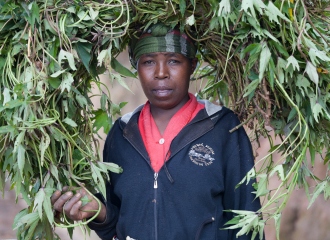
Six out of ten of the world’s poorest people are women1 who, as the primary family caretakers, shoulder much of the burden of raising children and producing food. This is no easy task, yet close to 75 percent of the world's women are unable to get bank loans because their jobs are unpaid or informal and because they lack the necessary financial knowledge.2 Empowering women through education and financial literacy training may help women achieve a greater degree of financial independence. When afforded more educational opportunities in adolescence, women go on to receive more education, increasing the overall human capital of the country and potentially helping to break the cycle of poverty.

Context of the Evaluation: 

Women in both Uganda and Tanzania bear the primary responsibility for both subsistence agriculture, especially food production, and domestic work, yet decision-making at the household level continues to be male-dominated. In Tanzania women are legally protected against gender discrimination, but only a very small percentage of decision-making positions in ministries and government bodies are held by women. Women in Uganda are also disadvantaged socially—a power imbalance within the community tends to marginalize women, making them even poorer than men.

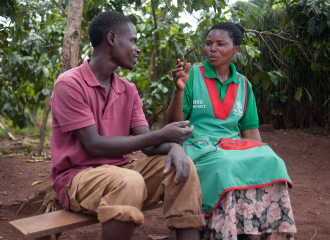
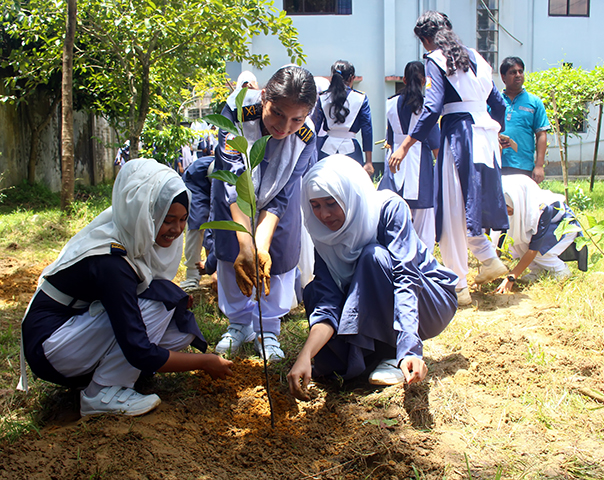
The Adolescent Development Programme (ADP) aims to increase the economic empowerment of adolescent girls in rural Uganda and Tanzania by working to change social patterns such as early marriage and the practice of dowry-giving. By focusing on providing adolescents with continued education and training, girls are enabled to make informed economic decisions and link their new capabilities, expectations, aspirations and opportunities to achieve economic empowerment.

Details of the Intervention: 

The project will evaluate the impacts of the ADP in roughly 300 villages dispersed throughout Uganda and Tanzania. The program will be implemented at the village level, and aims to reach all girls between the ages of 14-20 in a given village. The ADP will provide girls with a package of complementary skills and training designed to empower Ugandan and Tanzanian female adolescents through two streams of assistance:

  1. Formation of Adolescent Development Centres (ADCs) which will provide a context and location for programs which include life skills training, health assistance, income generation skills training, and asset transfer.
  2. Financial literacy training and access to microfinance.

The ADCs will promote female empowerment by providing a space in which the development of social, financial, and life skills training will be run. There are expected to be around 20 to 25 girls in each ADC, from which two girls will be selected and trained as Adolescent Leaders (ALs), to manage all the ADC activities and facilitate the training courses.

Researchers are interested in a number of outcomes, including the effects on revenue from economic activity, control over earnings, school enrollment and progression, engagement in risky behaviors, early marriage, information sharing among young women, assistance provided among social networks and improvements in their ability to analyze and gain from potential economic and social opportunities. Researchers will also try to measure changes in girls' expectations and aspirations, as well as those of their parents.

Results and Policy Lessons: 

Results forthcoming.

1 United Nations Development Programme, “Fast Facts – Gender Equality and UNDP,” http://www.undp.org/publications/fast-facts/FF-gender.pdf.
2 United Nations Centre for Human Settlements, “Press Release: 100 Million Homeless in World – Most are Women and Dependant Children,” http://www.un.org/Conferences/habitat/unchs/press/women.htm.

Incentivizing Safe Sex in Rural Tanzania

Researchers examined whether making cash payments conditional on testing negative for sexually transmitted infections (STIs) can improve safe sex practices among 18-30 year olds. Results reveal that giving cash payments of US$20, conditional on testing negative for sexually transmitted diseases, significantly reduced STI infection rates among young adults in Tanzania.

Policy Issue:

In 2009, approximately 2.8 million people were newly infected with HIV/AIDS, but it is estimated that only 40 percent of this population is receiving treatment. The extraordinarily high social and economic costs of the current HIV and AIDS crisis suggest that prevention may be far cheaper than treatment. However, existing prevention strategies, such as large-scale behavior change interventions, have had a limited impact on the HIV/AIDS infection rate. Conditional cash transfers (CCTs) have been used in a variety of settings as a means of incentivizing socially desirable behavioral change such as school enrollment or attending at preventive healthcare check-ups. Can CCTs be used to prevent people from engaging in unsafe sex?

Context of the Evaluation:

While the rate of HIV new infection has decreased substantially over the past decade, HIV/AIDS is still a major problem, particularly in sub-Saharan Africa, which bears an inordinate share of the global HIV burden. In Tanzania, where new incidences of HIV have declined over the past five years, 5.6 percent of the population is still infected with HIV/AIDS. Tanzania’s neighbors to the south have fared far worse - Angola, Botswana, Lesotho, Malawi, Mozambique, Namibia, South Africa, Swaziland, Zambia, and Zimbabwe are home to 34 percent of the global population living with HIV, and experienced 31 percent of all new HIV infections in 2009.[i] Effective policies to encourage preventive behavior are desperately needed in this area.

Description of the Intervention:

Researchers examined whether making cash payments conditional on testing negative for sexually transmitted infections (STIs) can improve safe sex practices among 18-30 year olds.

In the spring of 2009, 2409 individuals were randomly selected from the Ifakara Health and Demographic Surveillance System sample and then assigned to either a treatment group, where they would receive a periodic cash grant if they tested negative for STIs, or a comparison group. Participants in the treatment group were then randomly allocated into one of two sub-treatments: low-value vs. high-value CCTs. In the end, 1,124 participants were assigned to the comparison group; 660 were assigned to receive the low-value CCT of approximately US$10 per testing round; and 615 were assigned to receive the high-value CCT of US$20 per testing round.

All participants were tested for STIs at baseline and then every 4 months for one year. Participants in the two treatment arms were eligible to receive the cash transfer payment at each testing round if they tested negative for a set of curable STIs. The STIs tested were chlamydia, gonorrhea, trichomonas, and M. genitalium; all of these diseases are transmitted through unprotected sexual contact and therefore served as a proxy for risky sexual behavior and vulnerability to HIV infection. HIV testing was conducted at baseline and at month 12, but payments were not conditioned on those results because of local sensitivities.

Individuals in the treatment arms who tested positive for any of the curable STIs did not receive the conditional cash transfer but were eligible to continue in subsequent rounds after having been treated and cured of the infection. Anyone who tested positive for a STI, in either the comparison or treatment groups, was offered counseling and free STI treatment through health facilities of the district Ministry of Health.

Results and Policy Lessons:

After four and eight months in the program, there was no significant difference in the STI infection rate between either of the treatment groups and the comparison group. However, by month twelve, the high-value cash transfer led to a significant reduction in STI infection. Between month four and month twelve, the number of people testing positive for STI in the high-value conditional cash transfer arm decreased by 19 percent. In contrast, during the same time period, the number of STI-positive individuals increased by 19 percent in the low-value conditional cash transfer arm and by 13 percent in the comparison group.

The absence of significant impacts after four and eight months suggests that the impact of the conditional cash transfer may take time to materialize, perhaps because it is not easy to extricate oneself from complicated sexual relationships, or perhaps because participants needed time to become accustomed to (and trust) the incentive mechanism.


[i] UNAIDS (2010) “UNAIDS Report on the Global AIDS Epidemic.”

Syndicate content
Empowered by:
Copyright © 2011 Innovations for Poverty Action. All rights reserved.