
Project Evaluation

Extra Teachers in Kenya: Peer Effects, Pupil Teacher Ratios and Teacher Incentives

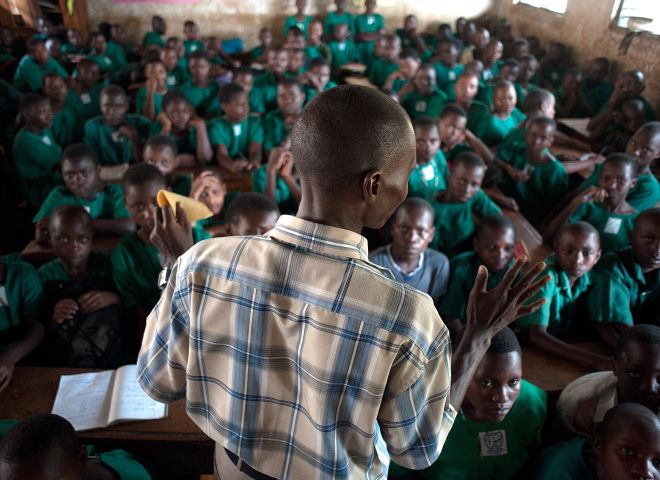
While the introduction of free primary education in many developing countries has been very successful at raising primary school enrollment, it has generally not been matched by increases in the number of government-salaried teachers, due to budget constraints. The resulting overcrowding of schools, as well as the influx of new students with little or no preparation, poses a new challenge to communities: how to ensure minimum quality of education.

Show Project Evaluation Details
Hide Project Evaluation Details

This project seeks to identify the main determinants of the quality of education, and how governments or donors can improve learning in this new context. Data is gathered from a pilot program that provides schools with funding to hire locally a contract teacher to address overcrowding. The contract teachers are paid approximately a quarter of the salary of regular civil service teachers. The NGO implementing the program is able to offer funding to 140 out of 210 eligible schools in the area; the 140 schools are randomly selected (treatment group) and remaining 70 serve as the control group. The treatment schools reduce class size in grade 1 by creating an additional section for that grade, taught by the contract teacher.

Of the schools that receive funding, half ("non-tracked schools") randomly assign students between the section taught by the contract teacher and the section taught by the regular civil service teacher. In the other half ("tracked schools"), students are assigned to sections based on levels of preparedness, and the contract teacher is randomly assigned to one of the two sections. Finally, some funded schools randomly receive additional training on local school committee oversight in order to monitor the locally-hired contract teacher.

By comparing various measures of education quality (student test scores and attendance, teacher attendance and effort) across schools, it is possible to isolate the effects of class size, local monitoring of teachers, and tracking by initial level of preparedness.

Empowered by:
Copyright © 2011 Innovations for Poverty Action. All rights reserved.